
Case study 3 of 5 · Decided by attention
Scaling oncology navigation for 30MM annual visitors
I led digital product for an oncology information and patient-engagement platform with 30MM annual visitors, and turned clinical protocols into plain-language steps patients and families could follow.
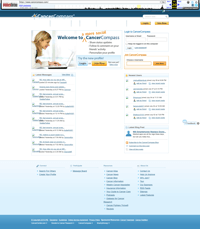
-
−25%
Bounce rate
From the platform rebuild and clinical navigation overhaul.
-
+267%
Chat conversions
From the same platform rebuild and clinical navigation overhaul.
-
30MM
Annual visitors
The oncology information platform the relaunch had to keep running.
Context
The platform was overwhelming users with dense clinical prose. A family facing a new cancer diagnosis needs the next step and a number to call, and the site gave them encyclopedia entries.
Oncology guidance has to be clinically exact: every plain-language simplification had to withstand oncologist and nursing review. The rebuild required standing up a new technology stack and engineering team while keeping live traffic running. 1 USPTO TSDR — serial 90330500 2 Axios
The decision
I relaunched the platform around plain-language care pathways and direct nursing triage. I put the product team and the nursing staff on a standing review of what patients were actually asking, so the triage rules could be retuned against real questions and still clear oncologist review.
| Product | Audience | My role |
|---|---|---|
| Health information site — CancerCompass | Patients and families; 30MM annual visitors | Relaunched it around plain-language care pathways and direct nursing triage |
| Hospital digital-marketing platform — CancerCenter, a separate property from CancerCompass | Hospital marketing: content, acquisition, and measurement | Product direction; defined its place in the rebuild’s stack |
| Patient-engagement web app — the CancerCompass web application, distinct from the information site above | Patients and families | Product direction; defined its stack and wrote the Director of Development role to build it |
What happened
The three products were the health information site, a hospital digital-marketing platform, and a patient-engagement web app. I directed the rebuild of the contact center on Salesforce Health Cloud, and set up feedback loops so nursing teams could keep tuning the triage rules and cut avoidable escalations.
Bounce rate fell 25% and chat conversions rose 267% across 30MM annual visitors after the platform rebuild and clinical navigation overhaul.
What I’d keep
A frightened person is not short of information. The scarce resource is attention and trust, so the product’s job is the next step and a person to call.
Everything I built here assumed it: plain-language pathways in place of encyclopedia entries, and a nurse one step away, with the product team reading what patients asked so the triage rules kept up. The AI products I build now start from the same assumption.
Sources
1 CancerCompass ownership
CancerCompass was owned and operated by Cancer Treatment Centers of America Marketplace, LLC.
The USPTO record names Cancer Treatment Centers of America Marketplace, LLC as the owner. The trademark was filed on 19 Nov 2020 and abandoned when the platform wound down before the acquisition.
Documents described, not republished
- Platform tech-stack architecture Defined July 2020 for the rebuild — two properties over one delivery pipeline and one contact center. Redrawn above; the original is an internal CTCA document.
- Director of Development job description The role I wrote to build the team: a hands-on technology leader for a remote development group — onshore contractors and a contracted team in Eastern Europe, shipping weekly with no separate IT or QA function.
The bounce-rate, chat-conversion, and 30MM-visitor figures come from my records. CancerCompass wound down before the CTCA acquisition and its analytics did not survive, so none of the three can be checked against a public source. The sources above cover platform ownership and the acquisition only, and back no figure on this page.
Revised