
About
I take unproven technical ideas far enough to see whether they’re worth scaling
14 years of product leadership and hands-on building: I originated Doximity Dialer, led R&D at CancerCompass, co-founded Andwise, and since 2024 have built the systems myself. I’m looking for a senior product role combining hands-on building with product leadership.
- Research: how molecules fold
- Turning capabilities into products
- Owning company-level consequences
- Building the underlying machinery directly
Experience
The record, in order
RNA Research
My work began at Georgia Tech, modeling RNA folding dynamics in Roger Wartell’s lab. As an undergraduate, I was first author on an ACS Symposium Series chapter on the thermodynamics of sRNA–mRNA interactions and the role of Hfq. I presented our findings at FASEB, BMES, and the ACC Meeting of the Minds as one of eight students selected institute-wide.
Epic
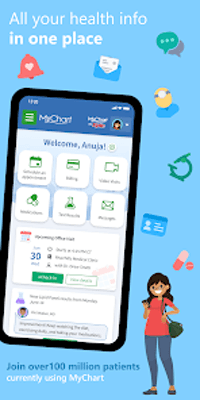
I had an MD admission in hand and deferred it a year to find out what healthcare technology was like from the inside. I joined Epic in Technical Services, owning what happened to client organizations after their software was installed, and wrote Caché plug-ins where the base product couldn’t reach a department’s actual workflow. I co-led CMS PQRS and built its escalation path.
- 8 client organizations owned post-install Two on outpatient, six on the patient web portal
- 4 months to internal area leadership Recruited from Technical Services
- 6,000 person company On its smallest team, building the patient-facing portal
| Client | Product | Scale | Outcome |
|---|---|---|---|
| 477-bed health organization | Outpatient (EpicCare) | 477 beds | An outpatient issue list long enough to be a cancellation risk, worked to root cause — 95% resolved — until the account became a reference. |
| 514-bed research hospital | MyChart and EpicCare Link | 514 beds; a 134-year-old health system | Online for the first time in the system’s history. |
By the end of that year I was building the patient-facing portal — and I turned the medical school acceptance down.
Doximity Dialer
Before Dialer, I authored Doximity’s HIPAA compliance documentation and ran a national physician compensation survey. I directed the data-science team that turned it into a predictive salary model by county and specialty. That many verified physicians is what let Doximity Dialer show the office number: a doctor the company already knew was doing the calling.
- 35,000+ ID-verified survey respondents National physician compensation survey; the data behind the salary model
- 6 of top 10 U.S. research hospitals On the enterprise marketing platform I built
- 350K NPs and PAs brought onto the platform People who had not been able to join
- 300K+ Dialer calls per average workday Across 250+ hospitals and health systems
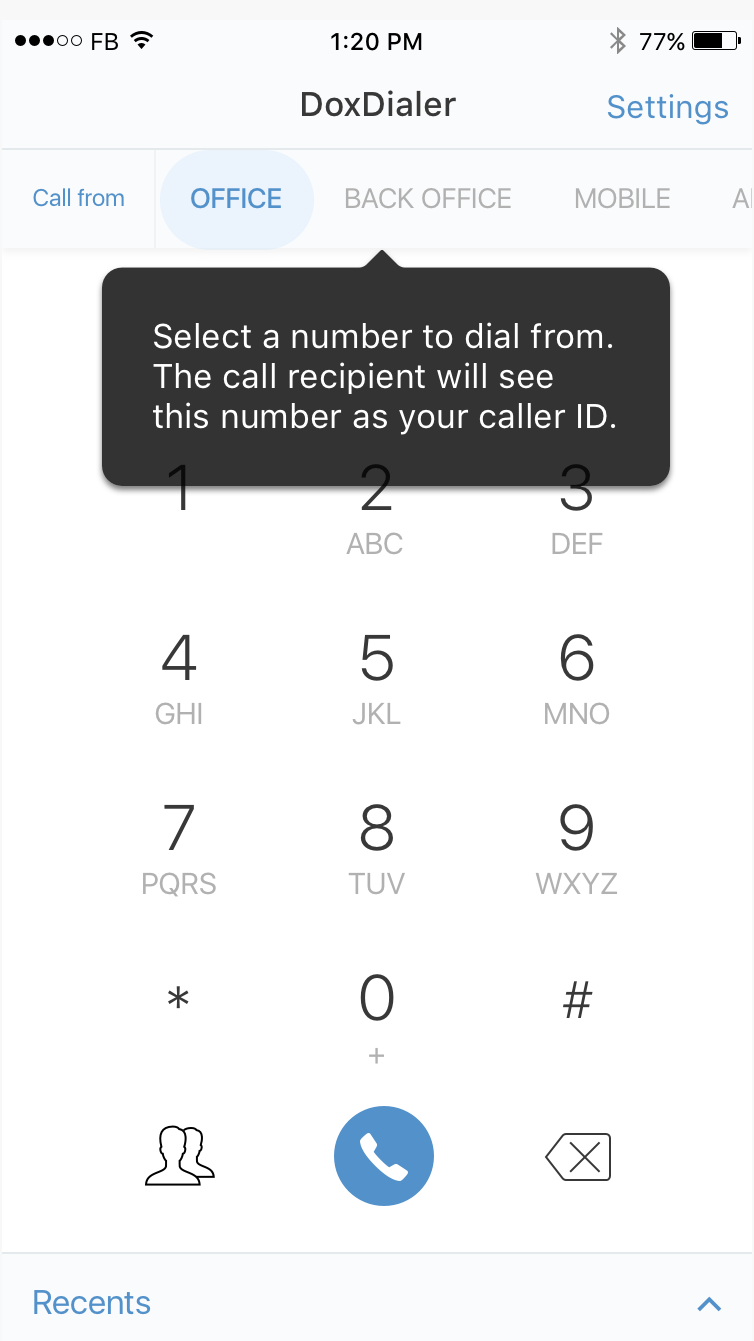
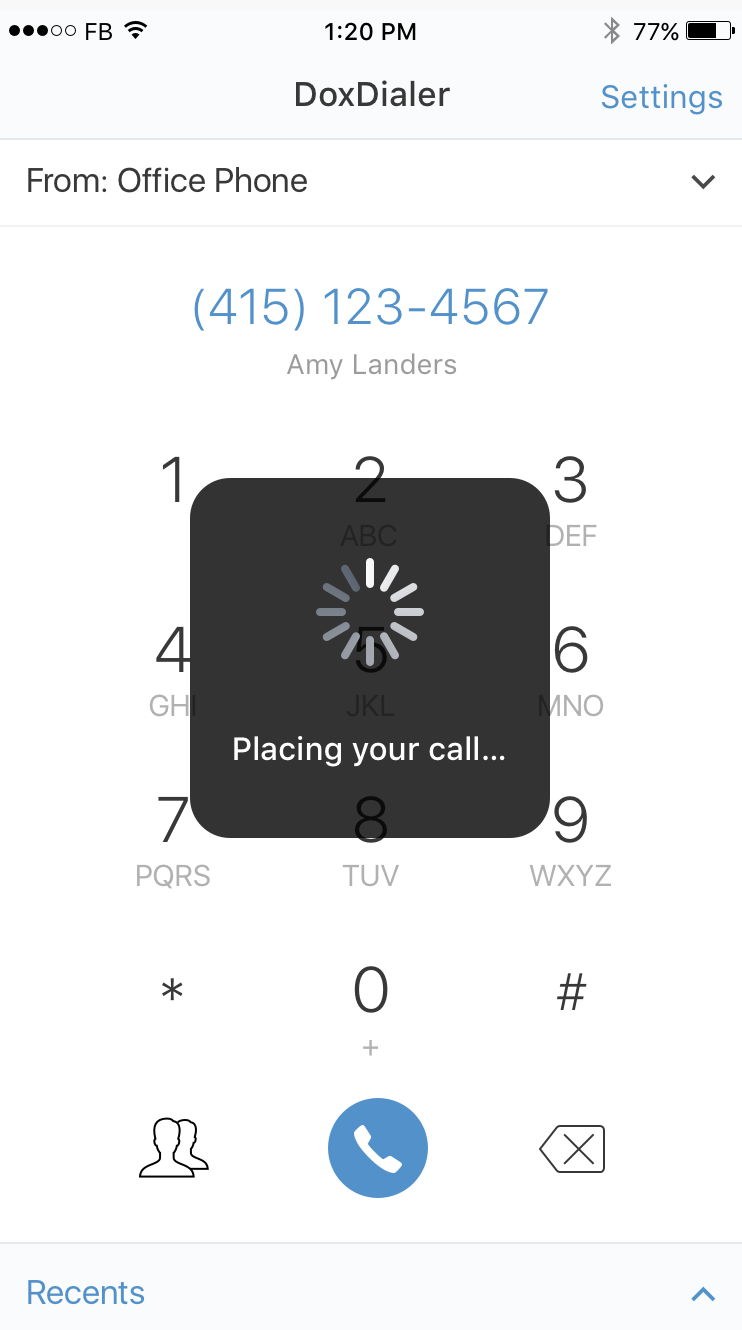
As founding product lead, I proved over a weekend that outbound calls could carry an unverified caller ID, and launched on that route deliberately. Our physician identity verification was strong enough to stand behind the number — the physician’s own office line, on their own device. I built the compliance framework for hospital IT approval and drove the Epic Haiku integration.
Across four years I built an enterprise marketing platform for research hospitals, founded the search team, and brought nurse practitioners and physician assistants onto the platform. I left as Head of Mobile Products & Growth, in charge of every mobile app and of user growth.
Dialer is the #1 Telehealth Video Conferencing Platform in the 2026 Best in KLAS Report, for the fifth consecutive year. The video calling it is ranked for was built after I left.
Doximity already knew who every physician was, so the product could put the office number on their calls. People act on what a system can prove.
NYU Stern
Doximity taught me that a technically sound product still has to clear the compliance policy, the security review, and the procurement process before it can matter. I took an MBA at NYU Stern to study finance, capital allocation, and organizational power, which I had been building around without studying. I wanted to know what stops a product once it works.
I tested it on other people’s companies before testing it on my own. I evaluated seed-stage healthcare and deep-tech teams for General Catalyst’s Rough Draft Ventures, then diligenced seed and Series A deals at a three-person healthcare fund.
In most of the companies I looked at, the product worked; what held them back was who would approve it, buy it, or pay for it. Three years later I ran into the same limit at Andwise, this time as the CEO.
CancerCompass
At CancerCompass / CTCA Marketplace, I was the first product and technical hire for a pre-CEO, pre-revenue venture, and stayed through its growth from 2 to 25 people. I led a cross-functional team of 14 across three products — the oncology navigation platform, a hospital digital-marketing platform, and a patient-engagement web app (CTCA was later acquired by City of Hope).
I cut the bounce rate and raised chat conversions, translating clinical protocol into steps a frightened family could act on.

Transcarent
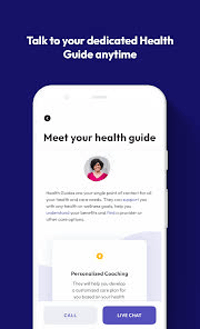
I joined Transcarent as an early product hire and stayed from the first activated member through 200+ employees; the company reached a $1.6B implied valuation over that period. I directed product across four specialty-care and navigation programs (Surgery, Everyday Urgent Care, Behavioral Health, and Oncology Care).
I led the Cancer & Decision Support pod — shipping CancerCare v1, a symptom-checking triage tool that inferred the right care pathway from reported symptoms, and an in-app second-opinion experience that handed off automatically to Transcarent’s nurse line, staffed through the second-opinion vendor Consumer Medical. I replaced manual case-by-case coordination with automated routing rules tied to clinical roles. The system assigned responsibility for each case, and nurses and navigators worked from a shared record during live care.
Andwise
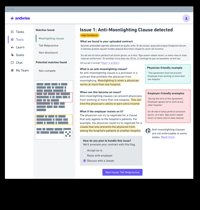
As co-founder and CEO of Andwise, I raised the initial funding, grew the physician user base, and convened a physician medical advisory board. I built the Contract Analyzer — automated clause-level analysis of physician contracts that flagged the clauses worth arguing about — and review routing with escalation clocks so each analysis reached an accountable reviewer on a deadline.
- $240K initial funding raised
- 1,200+ physician users
- 700 member community
Andwise showed in year one that physicians wanted it. I did not work out who would pay until year two, and by then every path that could fund growth made someone other than the physician the paying customer. Who pays decides who the product works for. That needed settling before we built, and I left it for later.
| Funding path | Customer | Whose interests the product would optimize for | Verdict |
|---|---|---|---|
| Direct physician subscription | The physician | The physician — but each one cost more to acquire than they would pay | Aligned incentives, unsustainable unit economics. |
| Hospital or employer benefit | The hospital or employer | The employer’s HR reporting, at the cost of physician confidentiality | Revenue possible, but the product could no longer claim to work for the physician. |
| Advisory or wealth-manager referral | The financial advisor, per referral | Lead generation for advisors; the physician becomes the product | Highest revenue, and the physician becomes what is sold. |
| Decision, 2024 | Shut the company down once funding and engagement fell short, rather than rebuild it around an employer or an advisor as the customer. | ||
My mistake was an assumption I never tested: that enough user value would eventually produce a business model that kept the physician as the customer.
Current Work
Since 2024 I have built on my own, because it is the fastest way to learn what an idea is worth. What I want next is the same work inside a company, with a team. I have led one before: a 14-person cross-functional R&D team at CancerCompass. At Doximity I took Dialer from prototype to a company-wide release with its engineering, design, and clinical teams.
| Project | What it is | Link |
|---|---|---|
| NextConsensus | Tracks when medical evidence moves ahead of guidelines. | /nextconsensus/ |
| Ambit | Decides which actions an AI agent is allowed to take, separately from which tools it can reach. | github.com/zz-plant/ambit |
| Whether | A weekly call on how hard a startup should hire, spend and raise, given the economy. Each week’s call is saved and cannot be edited later. | whether.work |
| Refract | Records when a source changed and what changed. NextConsensus is built on it; its published test set is 16,146 recorded edits. | github.com/refract-org/refract |
| Fast Harm, Slow Repair | A draft test for how far an AI mistake spreads, and whether the fix reaches everyone it affected. | /current-work/#fast-harm-slow-repair |
| The Crumple Zone | Essays on the wider pattern: how institutions distribute their own failures. | thecrumple.zone |
| Ethotechnics | An open framework for AI decision accountability. | ethotechnics.org/about |
- Data Data pipelinesTemporal modelsForecasting infrastructure
- Agents Agent capability and authorization graphs
- Evaluation Evaluation frameworks
- Compilers + rendering CompilersRendering engines
The projects are designed to feed each other. Current work shows how, and lists each one’s stage.
I can now take an unproven technical idea far enough to find out whether it holds, before an organization has to commit a roadmap to it.
What I believe
Each belief links to the work it came out of.
-
01 I treat workarounds as a fault in the system.
When a process only works because people keep pushing through, improvising, or doing unpaid work around it, I read that as a finding about the process, not proof that it works.
- Epic Installed, signed off, and live — and working only through the improvisation of the people around it.
- The Crumple Zone Essays on who absorbs a system’s failures when its design lets the burden fall on them.
-
02 Whoever controls a system should answer for it.
I don’t hold people responsible for outcomes they had no power to change, and I don’t let the people who designed or controlled the system off the hook.
-
03 Being able to do something isn’t permission to do it.
I don’t take the fact that a person, an institution or an AI system can do something as a sign that it should be allowed to.
- Ambit Ambit lists which tools an agent can reach and which it has used correctly, without assuming it is allowed to use any of them.
-
04 When cases keep not fitting, I check the category first.
When real cases keep failing to fit a category, I ask whether the category is wrong before I ask what is wrong with the person.
- Refract A source that stops matching its record is logged as a dated event to examine, not discarded as noise.
- NextConsensus Forecasts are frozen before the outcome is known, so one that turns out wrong is itself a result, not something to explain away.
-
05 I judge a system by what happens when it’s wrong.
I look at whether the error shows, whether someone can challenge it, and whether the system changes in response.
- Refract Downstream systems receive what changed and when, so a correction reaches everything the error touched.
- Fast Harm, Slow Repair A protocol measuring how far a wrong output travels before the correction catches up with it.
The product-level versions (what these require of the teams I lead, with the deployments each recurs in) are on the framework page.
How I build
I build with AI agents, this site included. I route cheap, checkable work to models on my own machine, and the build fails when a claim no longer matches its source. The tools and checks, and one change traced from start to finish, are on the current work page →
See also
Revised